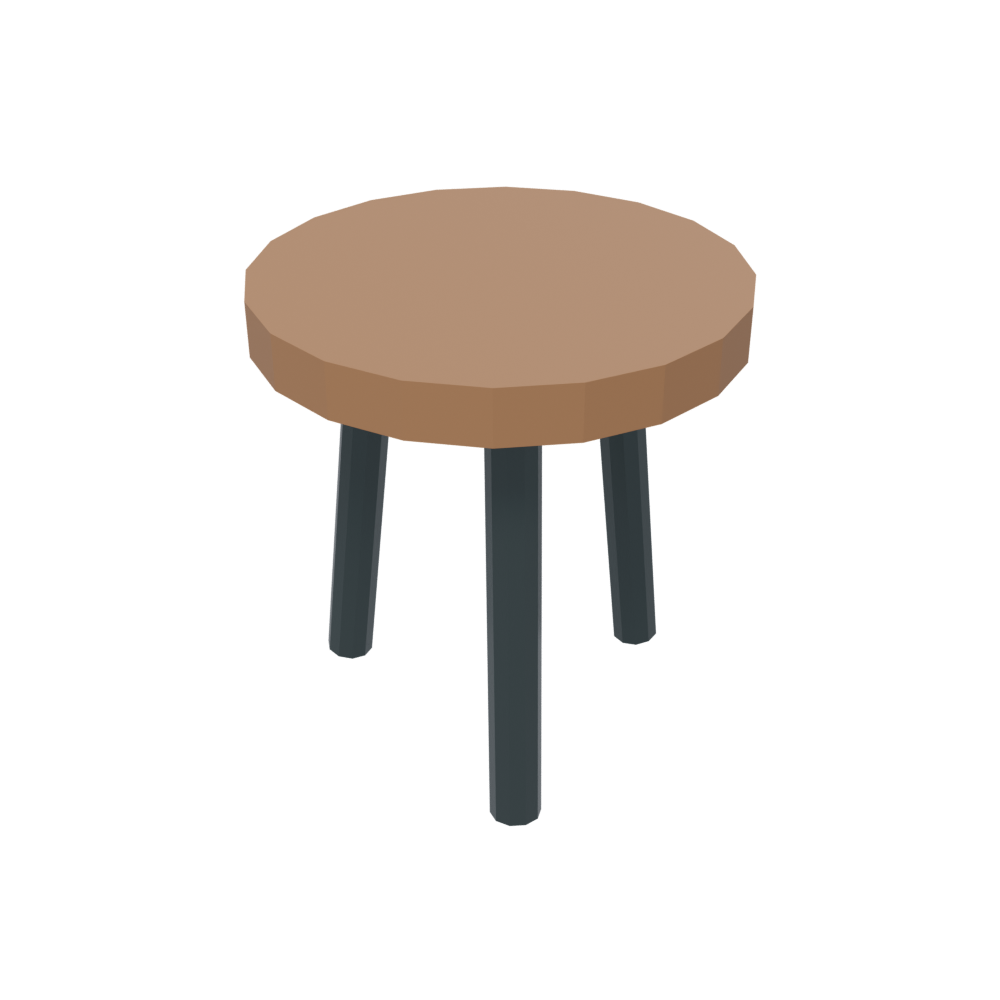
Tripod work stool
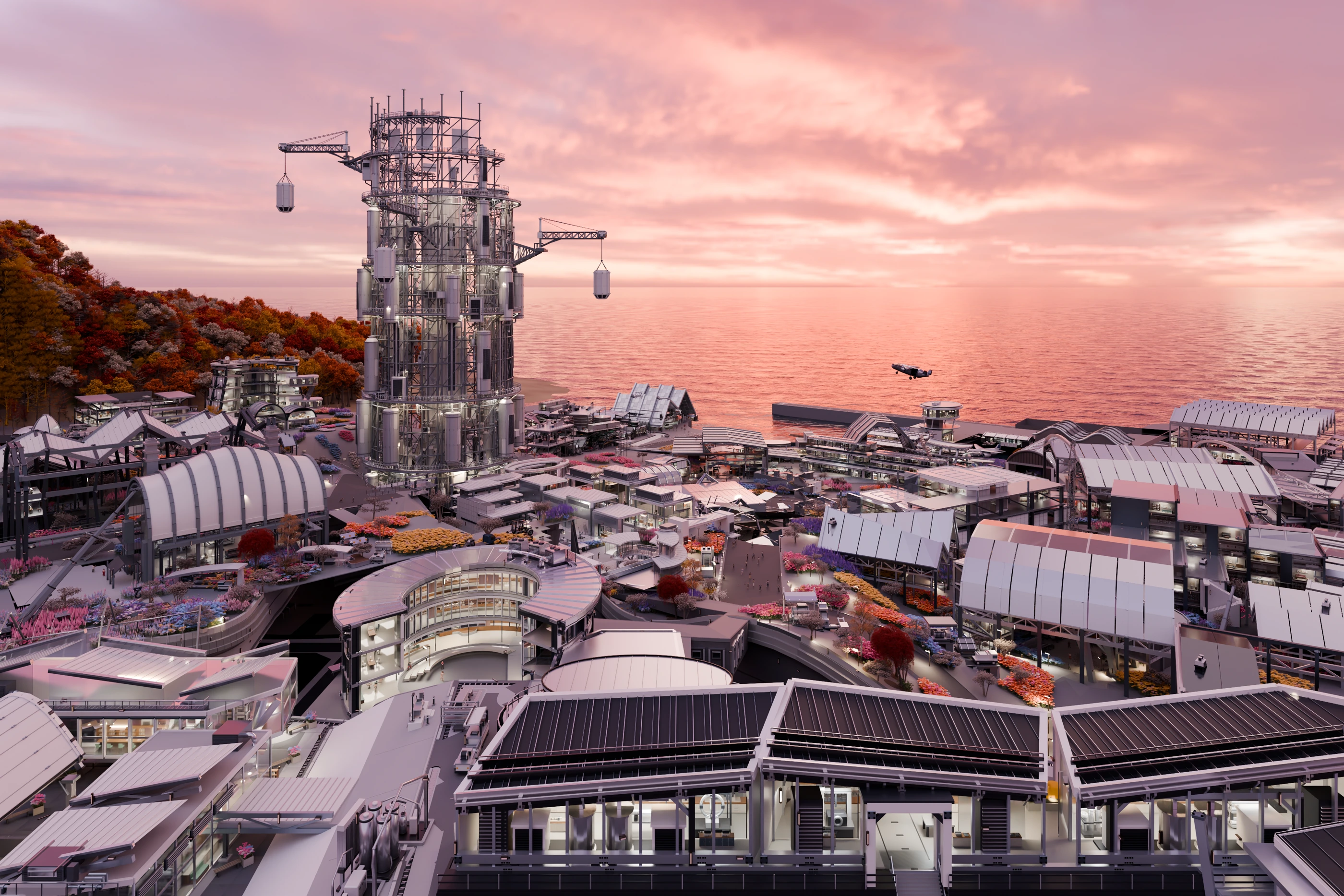
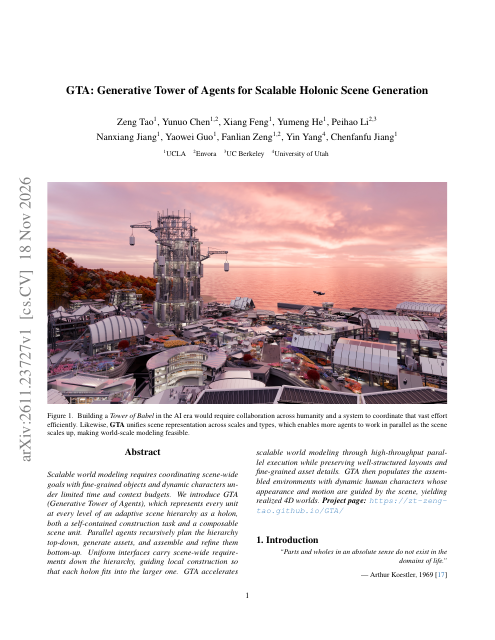
Building Tower of Babel in AI era
GTA unifies scene representation as holon across scales and types, which enables more agents to work in parallel as the scene scales up, making world-scale modeling feasible.
Scene units of any scale and type can be represented as holons. Each agent processes a holon group, and holon groups exchange information through unified interfaces.
Once a holon group’s dependencies are satisfied, it enters a pending queue. The scheduler assigns it to an available agentic slot, allowing multiple agents to work in parallel. As the scene scales up, more agents can be used.
Compare the overall scene layout, then explore individual objects in 3D.
Tripod work stool
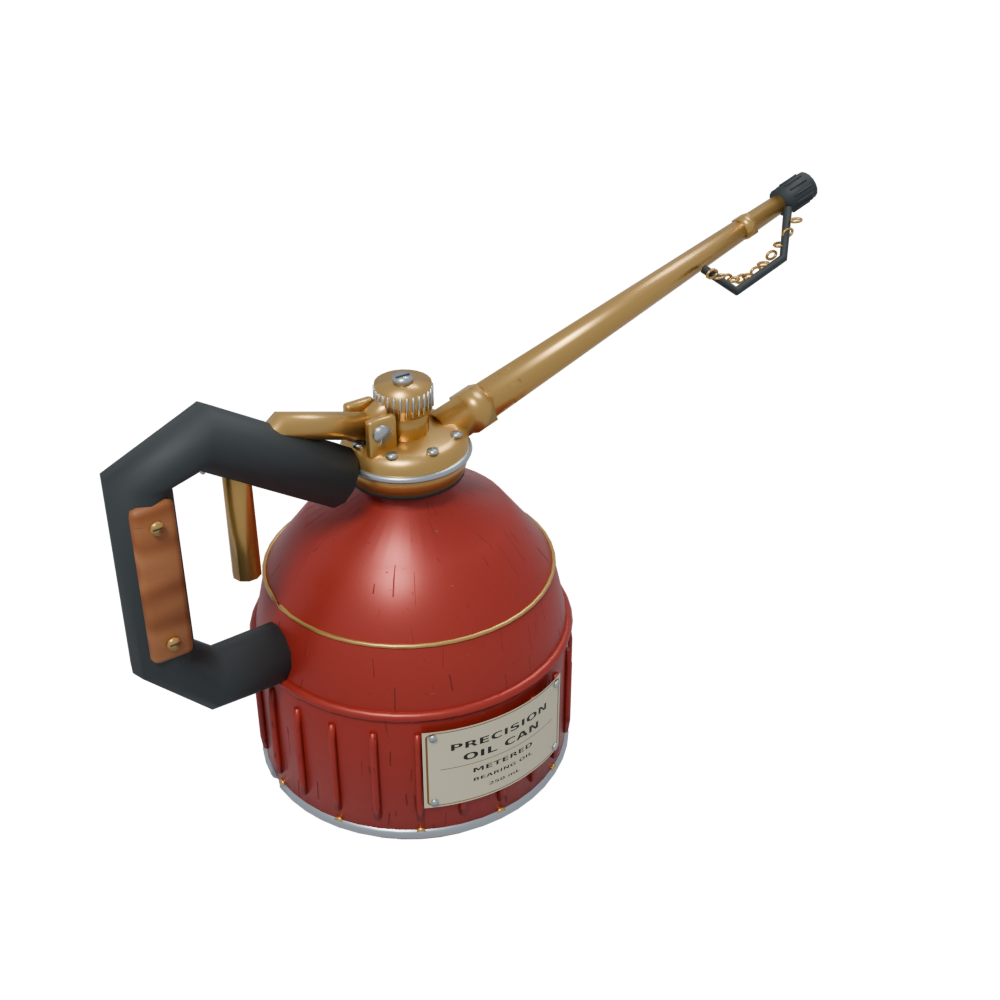
Metered oil can
3.36× faster than GPT-6 Astra (Staged)
Wall-clock time per object (s)
15.4× the throughput of GPT-6 Astra (Original)
System-level tokens per second (×10³)
† GPT-6 Astra (Original), GPT-6 Astra (Staged), and GTA use the same GPT-6 Astra backbone with medium reasoning effort. Original is the original baseline; Staged is a single-agent baseline following the same three-stage workflow as GTA: planning, asset generation, and placement & refinement. GTA results are measured with 32 agentic slots.
@misc{tao2026gta,
  title   = {{GTA}: Generative Tower of Agents for Scalable Holonic Scene Generation},
  author  = {Tao, Zeng and Chen, Yunuo and Feng, Xiang and He, Yumeng and Li, Peihao and Jiang, Nanxiang and Guo, Yaowei and Zeng, Fanlian and Yang, Yin and Jiang, Chenfanfu},
  year    = {2026},
  eprint  = {2611.23727},
  archivePrefix = {arXiv},
  url     = {https://arxiv.org/abs/2611.23727}
}